


Willow and Wetlands
Where would we be without dedicated and passionate volunteers?
Planting for the Future: Winter Conservation Work at Dumble Farm
Winter is upon us, and the time has arrived for the main conservation work to take place at Dumble Farm in East Yorkshire.
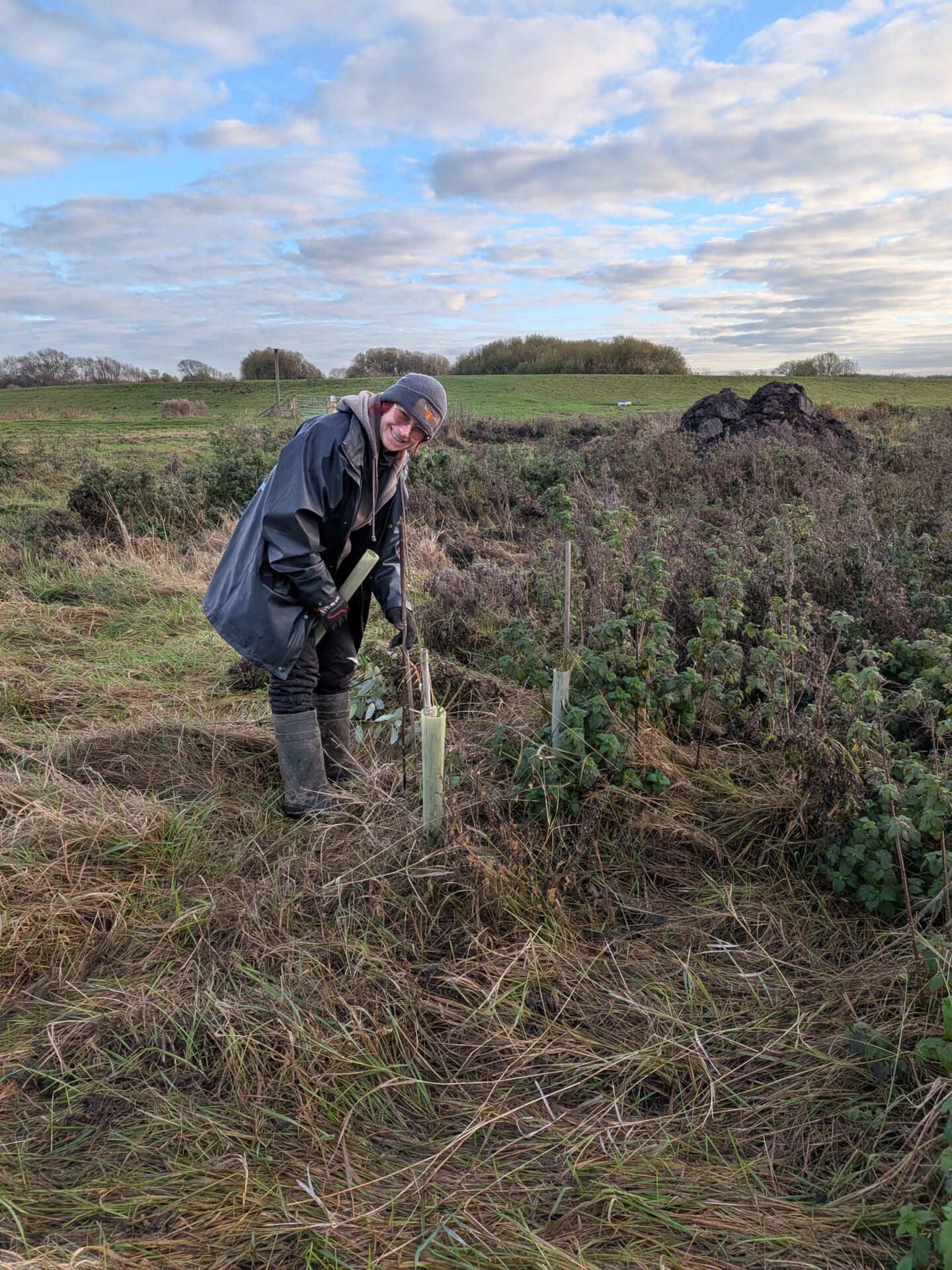
Farmer Fi and her team have been carrying out seasonal clearance around a pond, replacing dead saplings, and building up brash walls. This winter conservation work is vital for protecting wildlife and restoring habitats across our 200-acre farm.
Pond Restoration and Scrub Management
The developing scrub around the small pond on the farm has progressed well over the last four years. We are now seeing important ground cover used by many small mammals, and hunted over by several large birds of prey.
This habitat creation is a key part of our conservation project at Dumble Farm, where our fold of over 80 Highland cows act as conservation grazers.
Wetland Planting with Tophill Low Nature Reserve Volunteers
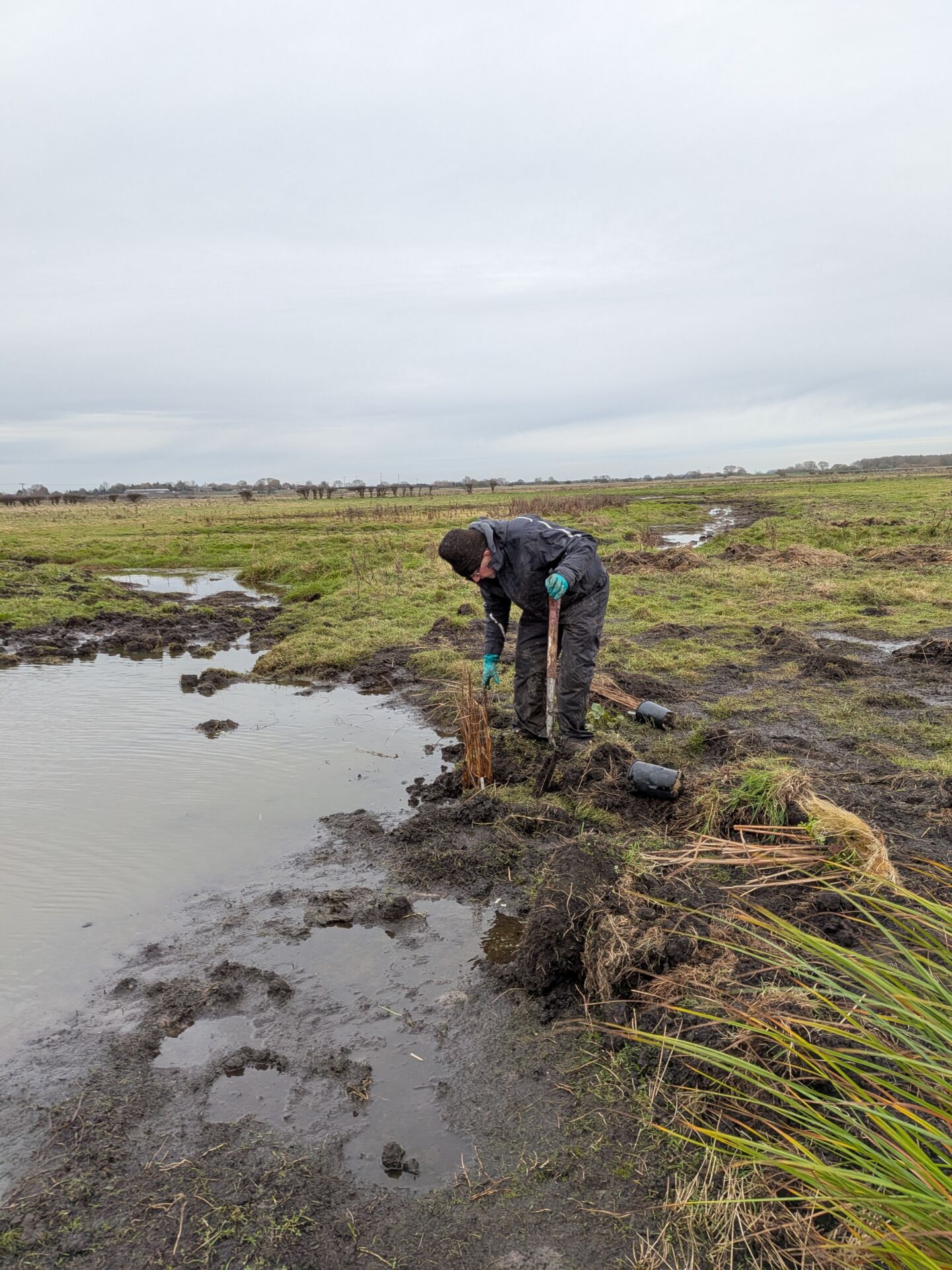
On a freezing cold, very muddy day in mid-November, Dumble Farm welcomed a dedicated team of volunteers, both from Tophill Low Nature Reserve and Dumble Farm itself.
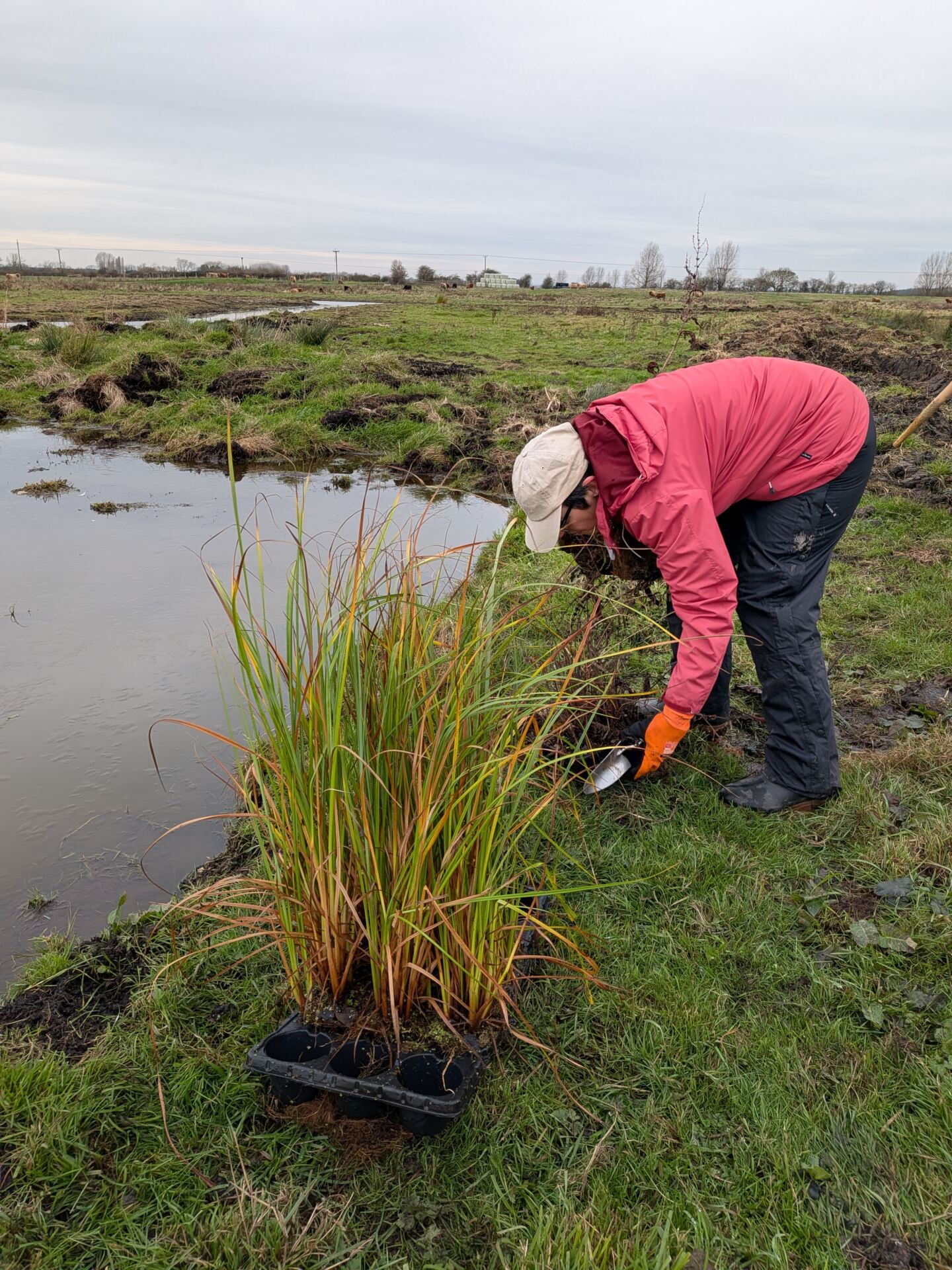
Tophill Low very kindly brought hundreds of wetland plants, with the aim of establishing them in priority habitats across Dumble Farm.
A selection of rare plants have been propagated by John Barnard (Tophill Low) and his volunteer team, from various locations in the nearby area. The plan is to re-establish them on local farms, gardens and nature reserves, to ensure the survival of their species.
Creating Wading Bird Habitat
Dumble Farm has a large area of land dedicated to breeding declining species of wading birds, with roaming Highland cattle as conservation grazers.
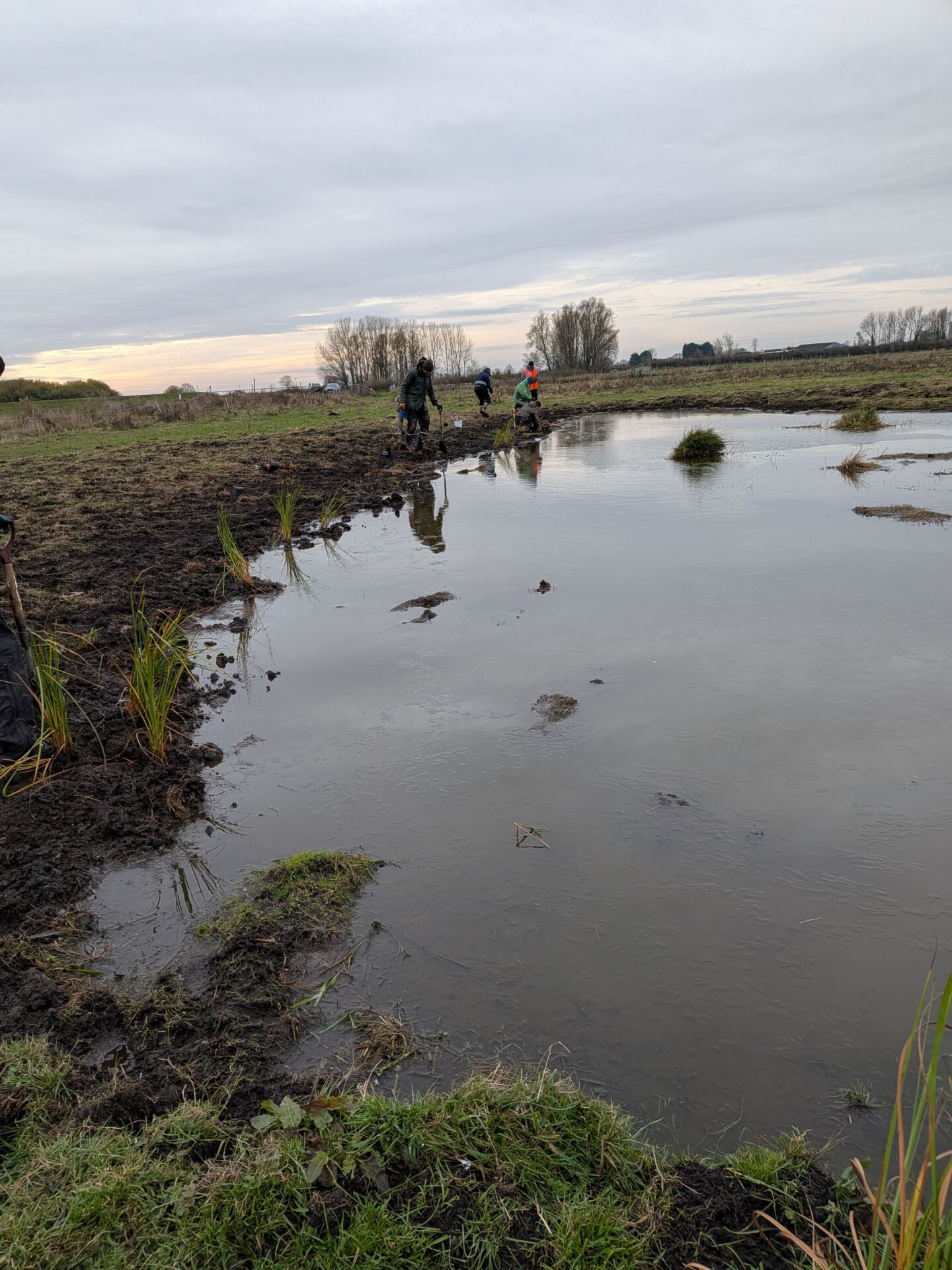
The area of planting is close to a dug-out spring that has created a year-round shallow pool — a haven for wildlife during increasingly dry summers.
Wading birds, such as lapwing, rely on the edges of muddy pools of standing water to provide a food source of suitable invertebrates. Sadly, little chicks feeding by the water are picked off by many predators from the air. Adding reeds around the edges will create hiding places and aid survival.
Other wetland wildflower species provide food for pollinators, plus create a display of colour for all to admire.
Wading Out to Work
A team of around a dozen people donned their wellington boots, coats and hats, collected a trowel and got stuck in with the task ahead. A warm drink was certainly going to be needed at the end!
In no time, all the planting was done and we rounded off the day with coffee, tea and cake.
Further work, in a different area of the farm, is planned in spring. Time will tell how many of these plants survive, but we can record and monitor how different species have established, learning more about positioning in the future.
This type of work to help restore and save wildlife habitats could not happen without a dedicated and knowledgeable team behind it — where would we be without them!
Thank you to the amazing volunteers who have made this all possible.
Support our conservation work: Income from our Highland cow experiences and cow sponsorship helps fund habitat restoration like this.

